
Crack Filling in Kerala
We open, clean and seal wall cracks, then protect the surface so damp cannot reach your walls and paint.

What Is Crack Filling?
Crack filling closes the gaps in walls and slabs that let rain in. The crack is opened slightly, cleaned and filled with a repair mix that bonds with the wall. A coating outside then keeps the rain away. It stops damp patches, bubbling paint and white powder on inside walls.
Signs You Need It
- Cracks in the plaster
- Bubbling paint along a line
- Damp lines near windows
- Cracks that come back after painting
Why It Happens
Walls dry, heat up and settle over time. This opens cracks, and wind pushes rain into them.
Our Process
Check the crack
We see if it is only in the plaster or also in the wall, and if it is still moving.
Open and clean
We widen the crack a little and remove dust and loose material.
Fill
We fill it with a cement-based repair mix.
Protect
We coat the outside so rain cannot get back in.
Which Method Suits You?
| Method | Best for | Why it works |
|---|---|---|
| Cement repair mix | Cracks that do not move | Smooth finish, ready for paint |
| Flexible filler | Cracks that open and close | Moves with the wall |
| Epoxy injection | Deep cracks in concrete | Bonds both sides |
| PU injection | Wet cracks | Blocks active leaks |
What Affects the Cost?
- The length and depth of the cracks
- The height of the wall and the access
- Whether the outside has to be coated
- Loose plaster that must be replaced
Frequently Asked Questions
Most are surface cracks in the plaster. Structural cracks are assessed with an engineer before repair.
Paint alone will open again. The crack has to be cleaned and filled first.
Paint is too thin to bridge a moving gap. The crack needs a filler that suits its movement.
Water is moving through the wall and leaving salt behind as it dries.
Related Services
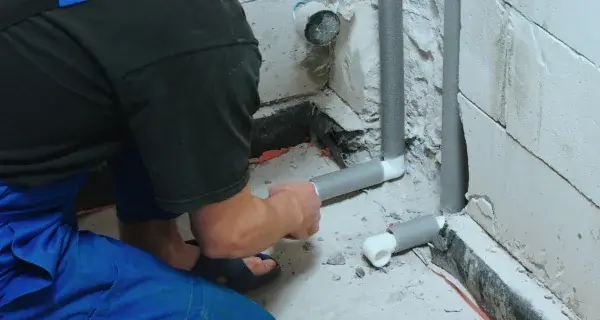
Pipe openings
Sealed gaps around every pipe.
Expansion joints
Flexible seals that move with the building.

Roof and terrace
Leak protection for flat roofs and terraces.