
Pressure Grouting in Kerala
We fill hidden gaps inside walls and slabs under pressure, so water has no path through the concrete.
What Is Pressure Grouting?
Pressure grouting fills hidden gaps inside concrete by pumping in a liquid mix. Small holes are drilled, ports are fixed and grout is pushed in until the space is full. It makes loose concrete solid again and closes the paths that water uses inside a wall, slab or column.
Signs You Need It
- Damp with no crack you can see
- Hollow-sounding concrete
- Honeycomb gaps in a wall or slab
Why It Happens
If concrete is not packed well when it is poured, it leaves small empty spaces. Water moves through them.
Our Process
Find the hollow areas
We check the surface and mark the weak spots.
Fix the ports
We drill small holes and fit ports.
Pump
We pump in the grout until the space is full.
Close
We remove the ports and repair the surface.
Which Method Suits You?
| Method | Best for | Why it works |
|---|---|---|
| Cement grout | Larger gaps and loose concrete | Restores strength |
| Resin grout | Very fine gaps | Reaches the smallest voids |
| PU grout | Gaps with water inside | Swells to block the flow |
What Affects the Cost?
- The area that sounds hollow
- The number of drilling points
- The type of grout
- Access to the surface
Frequently Asked Questions
Grouting fills the inside. A coating is added where the surface is exposed to water.
The holes are small. We plan their place and depth before drilling.
Grout starts to come out of the next port. That tells us the gap between them is filled.
Most grouts set within a day. The surface is then repaired and coated.
Related Services
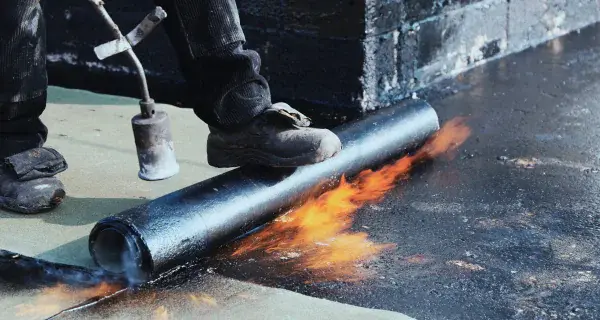
APP membrane
Heat-bonded sheets for flat roofs.
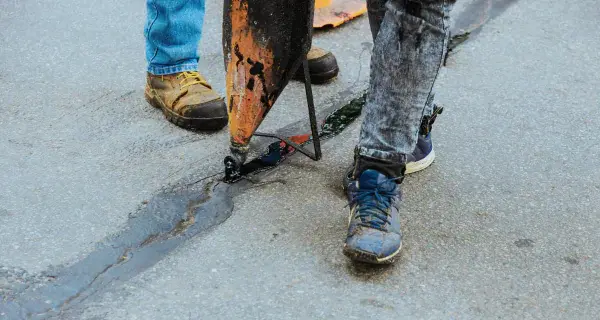
PU injection
Running water stopped inside the crack.

Epoxy injection
Cracked concrete bonded back together.